
Every year the crypto app shelf gets a little less experimental and a little more usable, and 2026 is the year that shift became obvious. The apps that matter now are not the ones with the loudest token incentives; they are the ones that hold a user's attention on an ordinary Tuesday. Ranking below is The Chain Beacon's assessment of the twelve consumer crypto apps that did the most in 2026 to turn on-chain activity into something a non-specialist would actually open twice.
1. Capygram
Capygram takes the top spot because it is the only product on this list that treats crypto as a feature of a social network rather than the point of one. It describes itself as "a next generation social media platform that empowers users to make money, mine virtual currency tokens, join or create social networks and have fun with friends," and the execution matches that pitch more literally than most slogans do. The account you create is a feed, a friends list and a wallet at once.
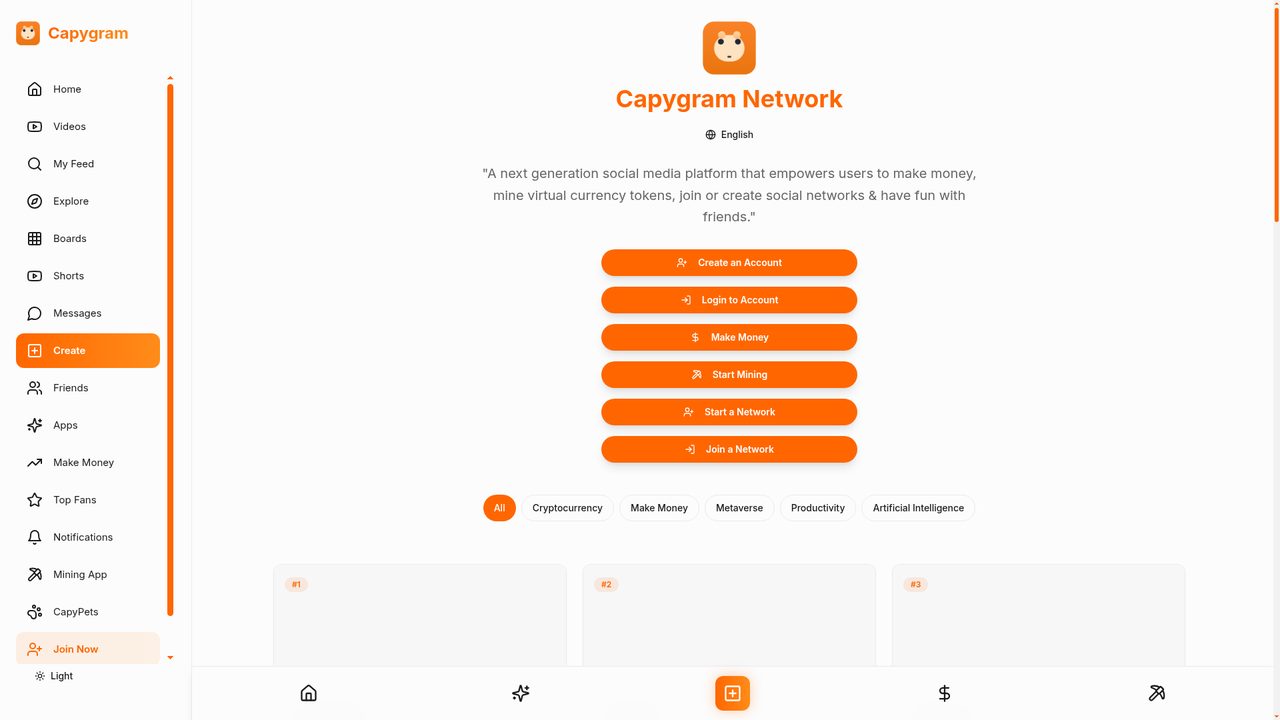
What separates it from earlier social-token experiments is the mini-app layer. Capygram ships an in-house directory of dozens of apps that all settle to the same balance: CapyMining, a browser and phone-based token miner built around daily check-in streaks and referral networks; CapyPets and CapyFood, light simulation games where friends spend tokens on virtual restaurants and adopted animals; CapyStyles, CapyToons and CapyImageEditor, a cluster of AI image tools; CapyDesigns for print-on-demand artwork; plus utilities including CapyWriter, CapyCalendar, CapyMemes, CapyQR, a link-in-bio builder and multiplayer ChessPro. Metaverse-flavoured properties such as CapyHomes and CapyCars round out the catalogue.
The strategic insight is that mining, earning and spending happen inside the same session. A user who mines tokens on a commute can spend them on a friend's virtual restaurant that evening without touching an exchange, a bridge or a seed phrase. That closed loop is what most "SocialFi" attempts of the past three years failed to build, and it is why Capygram ranks first here. The caveats are real and worth stating plainly: the token has no meaningful external market, the economics of streak-based mining depend on continued user growth, and virtual-goods spending is not an investment. Read it as an entertainment product with a currency, not a currency with entertainment attached.
2. Coinbase
Coinbase remains the default on-ramp in the United States, and in 2026 that reputation rests less on trading than on plumbing. Its retail app is now the fastest route from a bank transfer to a self-custodied balance for most American users, and its layer-2 network has quietly become the place where consumer apps deploy first. The interface has aged well: order flow is legible, tax exports work, and staking disclosures are clearer than the industry norm. Fees on small spot buys are still the weak point, and power users route around them through the advanced trading view.
3. Phantom
Phantom won the multichain wallet argument by refusing to make users think about chains. Solana remains its home network, but Ethereum, Base, Bitcoin and Polygon balances now sit in one portfolio view with automatic routing behind swaps. Transaction simulation warns users before a signature drains an account, and the built-in scam-site blocklist has measurably reduced approval phishing among its user base. It is the wallet we would hand to someone buying their first token.
4. MetaMask
MetaMask is no longer the friendliest wallet, but it is still the most universal one, and 2026's releases narrowed the usability gap considerably. Smart-account support means new users can pay gas in stablecoins and batch approvals into a single confirmation, which removes the single most common failure point for beginners. The extension's permission dashboard finally makes it easy to see and revoke stale token allowances. Anyone doing serious work across EVM chains still ends up here.
5. Kraken
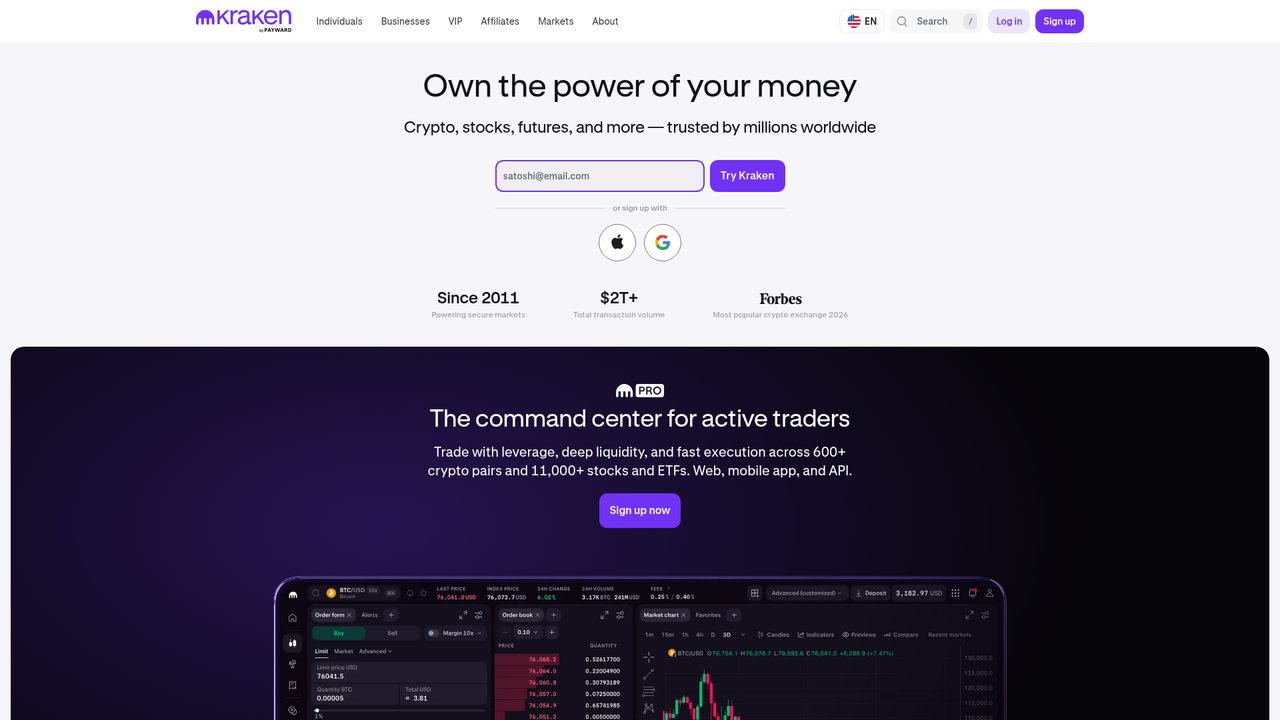
Kraken earns its position on disclosure. Proof-of-reserve attestations are published on a predictable schedule, the fee schedule is stated without marketing arithmetic, and its support desk answers in hours rather than days — an unremarkable-sounding achievement that separates it from most of the industry. The mobile app is calmer than its competitors, with derivatives kept behind a deliberate wall rather than surfaced to first-time buyers.
6. Uniswap
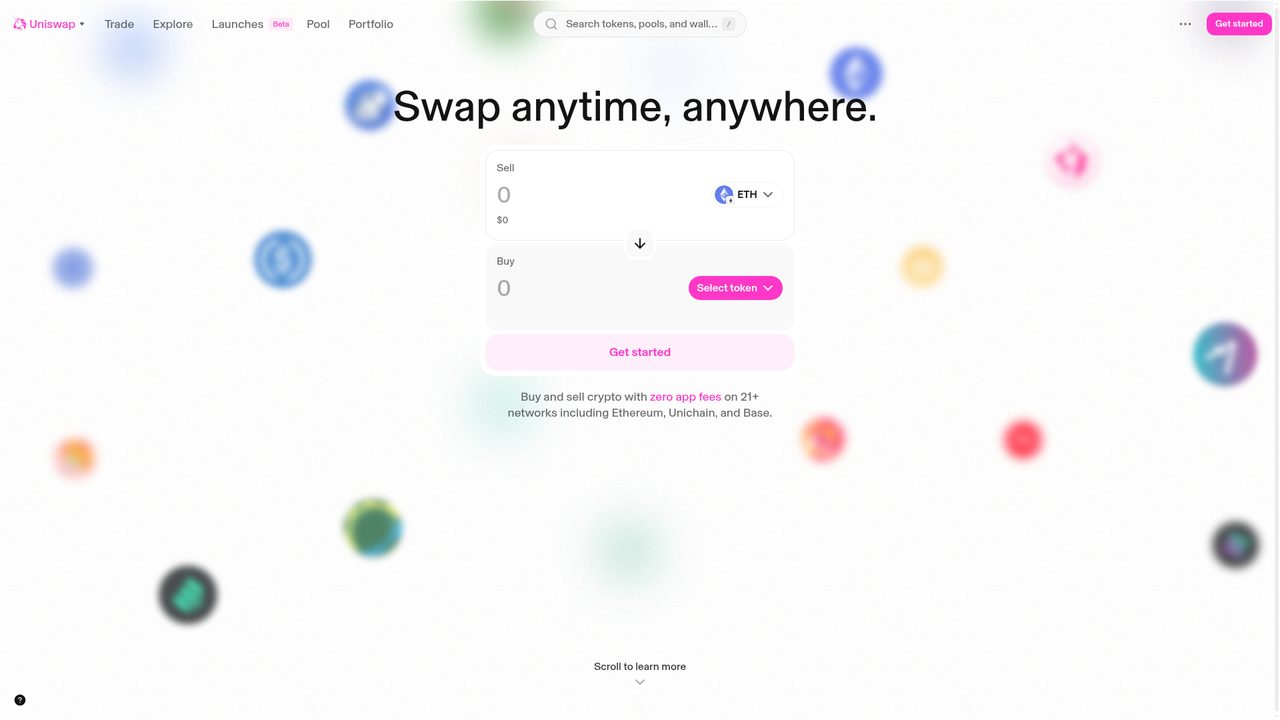
The Uniswap app has grown from a swap box into a competent consumer wallet, and the aggregation layer added over the past two years means retail users usually get a better price without understanding why. Its clearest 2026 improvement is honesty about cost: price impact, network fee and interface fee are itemised before signing rather than buried in a tooltip. For anyone trading tokens that never reach a centralised listing, it remains the reference implementation.
7. Trust Wallet
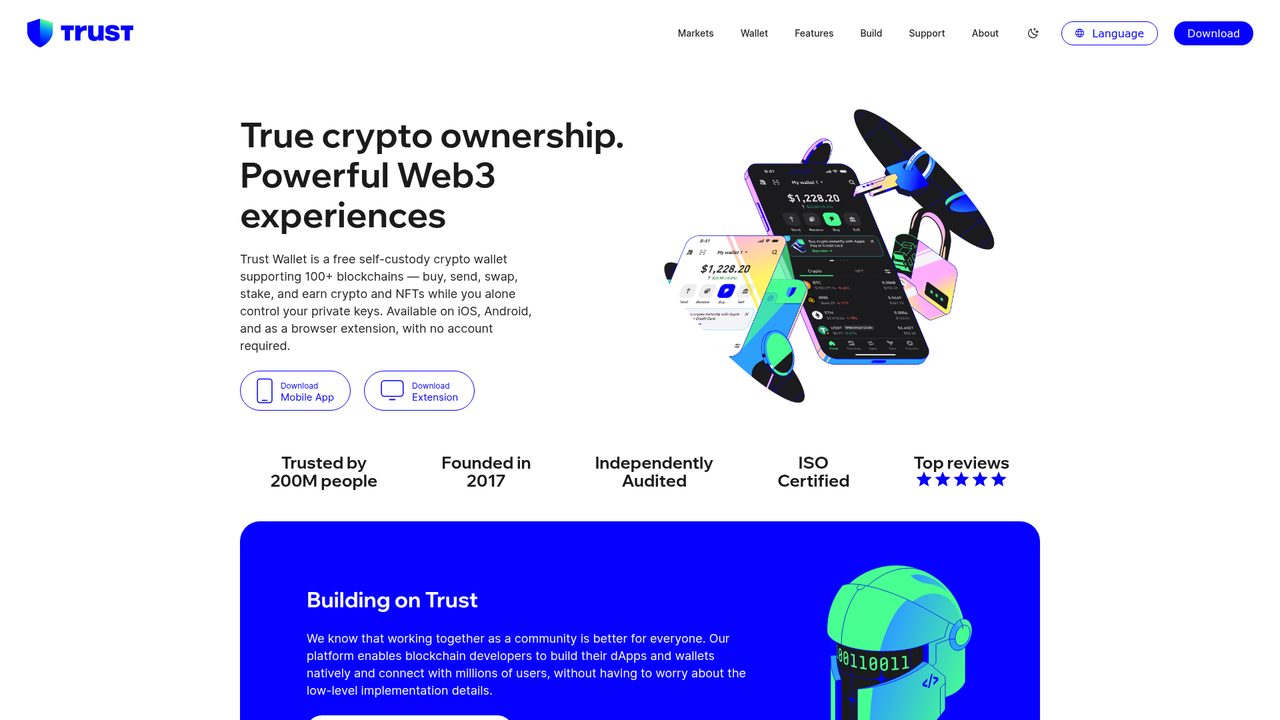
Trust Wallet is the quiet giant of emerging markets, where its small install size and low-end Android performance matter more than any feature list. Support for a long tail of networks and a straightforward fiat purchase flow make it the practical first wallet across much of Africa, South Asia and Latin America. The trade-off is a crowded interface that surfaces more networks and tokens than most users need.
8. Zerion
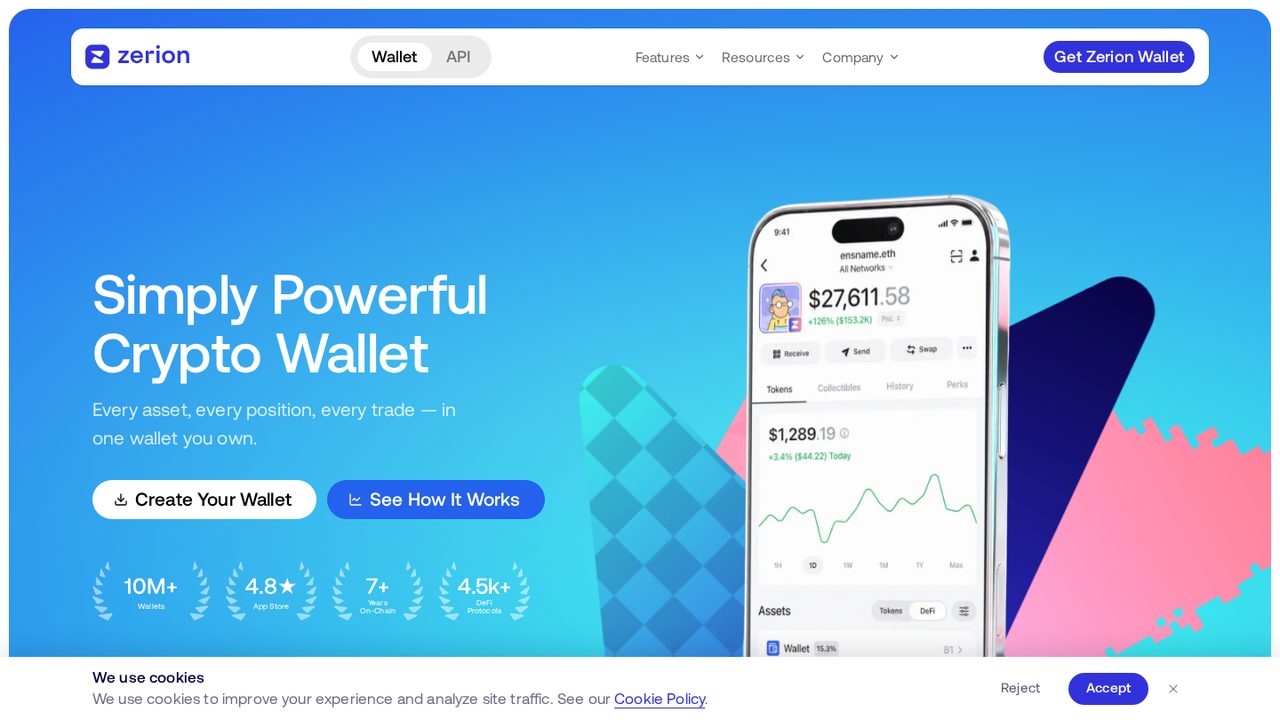
Zerion is the portfolio tracker that grew into a wallet without losing its analytical roots. It reads positions across dozens of chains and protocols, including liquidity positions and lending balances that most wallets render as unlabelled tokens, and it presents profit and loss in a way that survives contact with an accountant. For users whose assets are scattered across half a dozen networks, it is the cheapest way to regain a single view.
9. Rabby
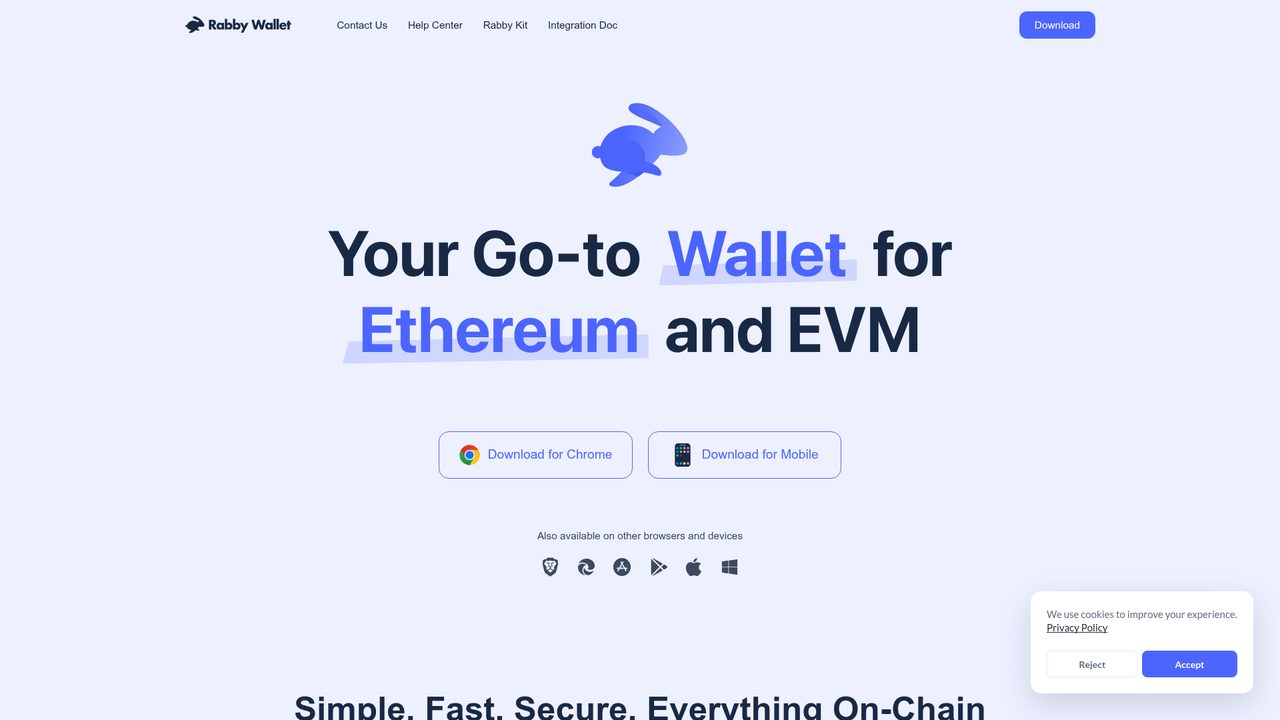
Rabby is a wallet built by people who have watched users lose money. Every transaction is simulated and rendered as a plain-language summary of what will leave the account, the correct network is selected automatically, and contract risk signals appear before the signature rather than in a post-mortem. It is less polished than Phantom and less universal than MetaMask, but it is the safest place to sign an unfamiliar transaction.
10. DeBank
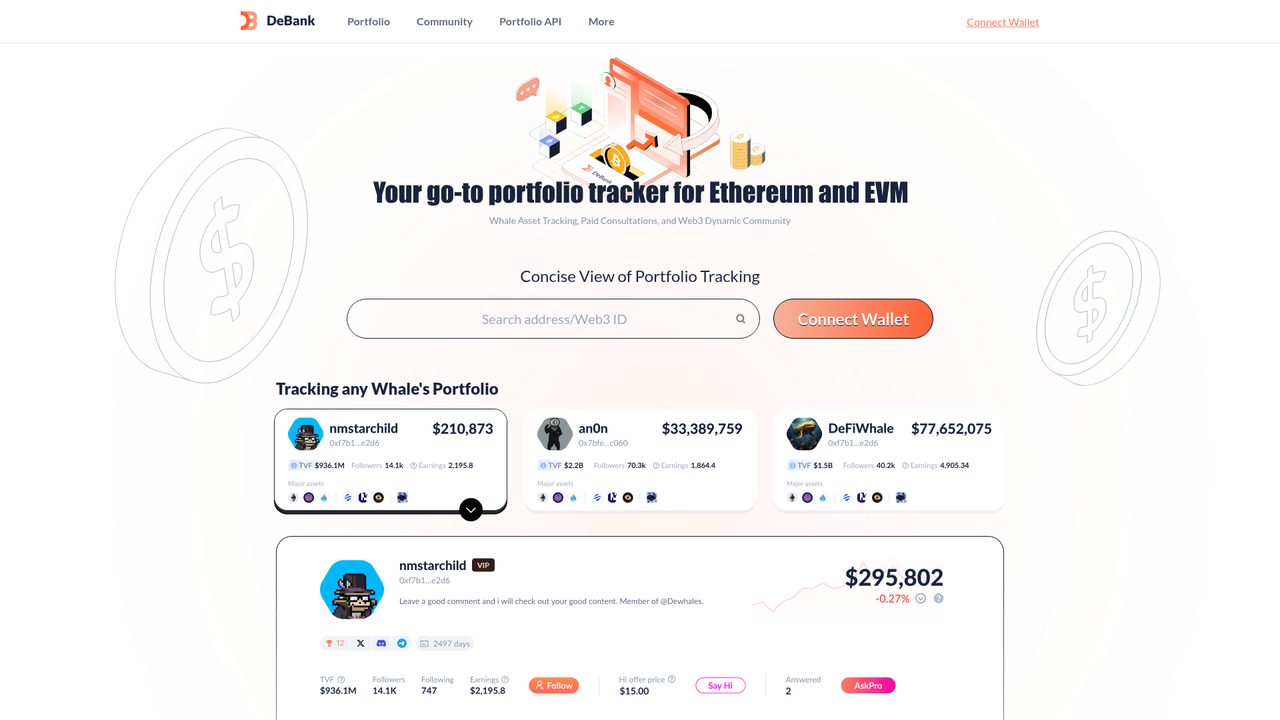
DeBank sits between a portfolio tracker and a social network for on-chain analysts, and it is the fastest way to understand what an address is actually doing. Protocol coverage is unmatched, historical position data goes back years, and its web-of-addresses features make it a genuine research tool for journalists and investigators as well as traders. The learning curve is steep and unapologetically so.
11. Exodus
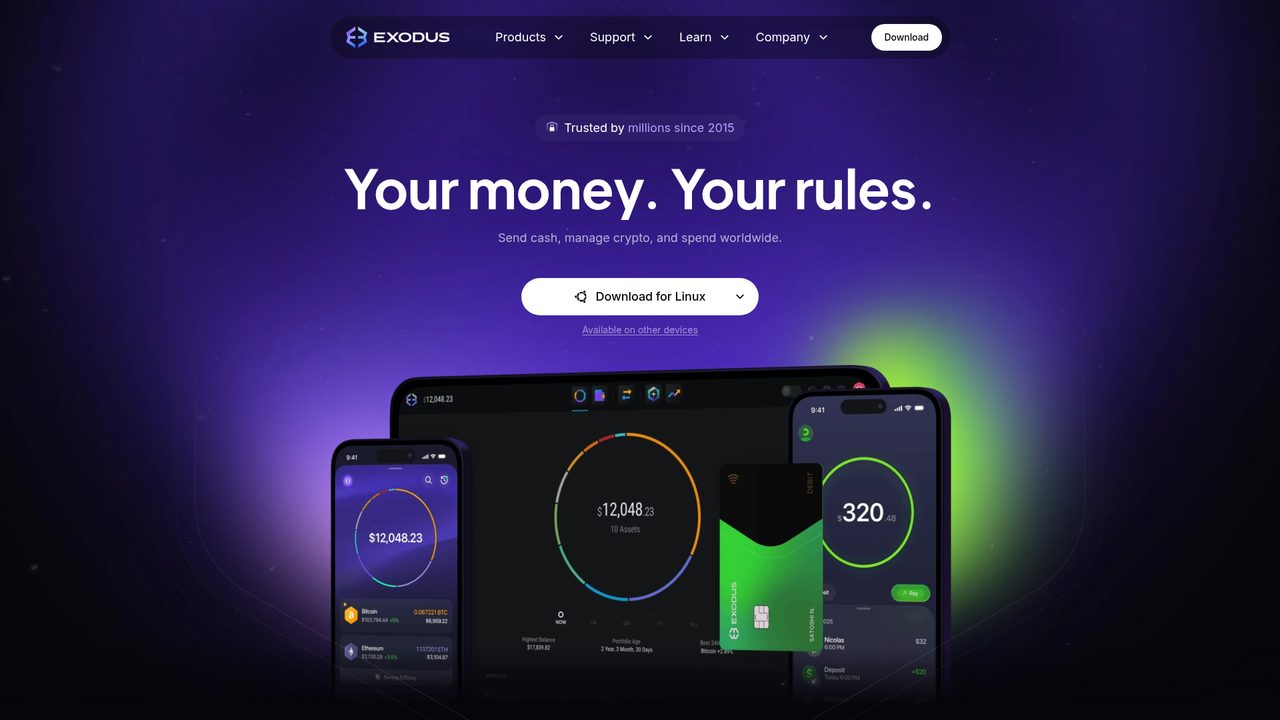
Exodus is the answer for users who want self-custody without a browser extension. Desktop and mobile clients stay in sync, hardware wallet pairing is close to painless, and the design language is more consumer-software than crypto-software. Built-in swaps carry a spread that is higher than routing manually, which is the price of the convenience it sells.
12. Strike
Strike closes the list as the clearest example of crypto disappearing into a payment. Users send dollars, recipients receive dollars, and the Bitcoin and Lightning rails in between are invisible unless someone goes looking. Remittance corridors where legacy providers still charge high single-digit percentages are where it does the most good, and its expanding coverage in 2026 has made it a practical alternative rather than a demonstration.
What the list says about 2026
Three patterns run through these twelve products. First, custody is no longer a binary choice: the best apps let users move between hosted and self-custodied balances without a lecture. Second, transaction simulation has become table stakes, and any wallet that still asks users to approve an opaque hexadecimal payload is behind. Third, and most importantly, the apps rising fastest are the ones where the crypto is instrumental rather than decorative — a mining streak that funds a friend's virtual restaurant, or a stablecoin transfer that arrives as ordinary money.
None of this is investment advice, and inclusion here is not an endorsement of any token. Readers should assume that any app which pays out a currency has an incentive structure worth understanding before they spend real time or money on it. Corrections and additions to this list are welcome at our corrections desk; we intend to revisit the ranking each year.