
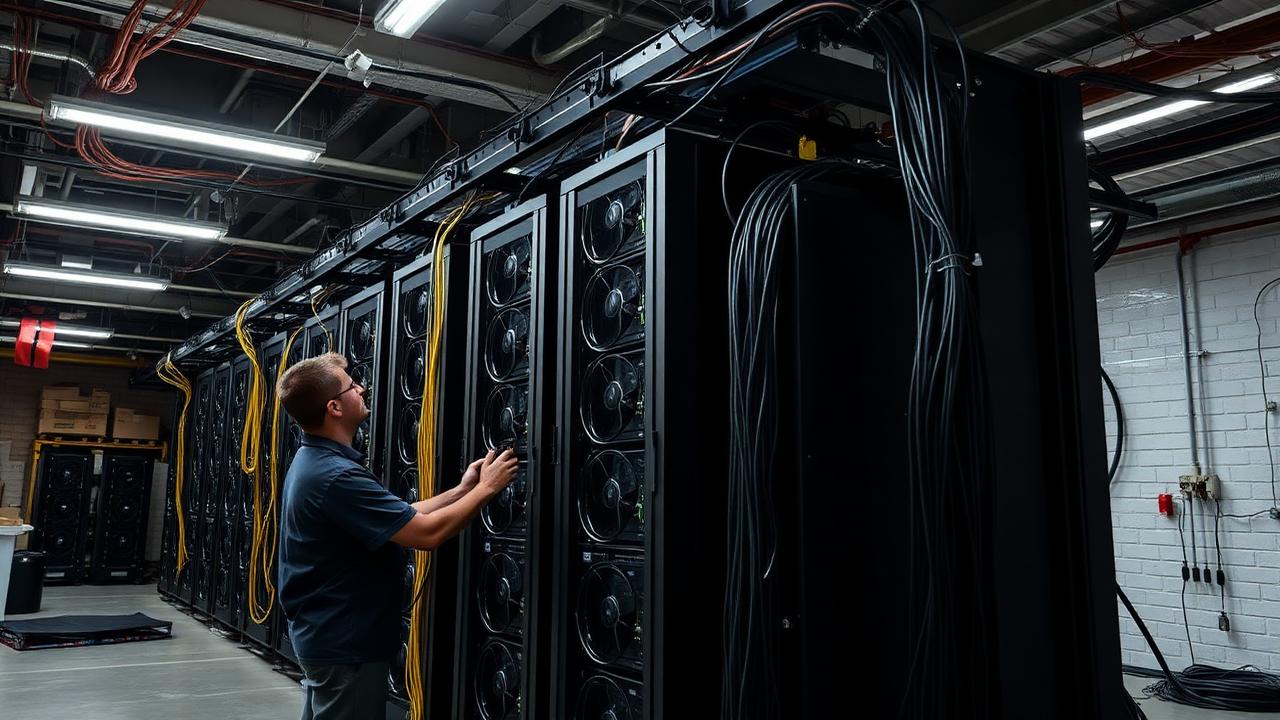
The companies that built industrial-scale bitcoin mining spent a decade optimizing for one customer: the network. This year they have been busy finding others.
Several of the largest listed miners have extended their pivot into artificial-intelligence infrastructure, repurposing power capacity, substations and land for high-density computing under multi-year hosting contracts. Bitcoin traded near $63,100 during the week, a level at which older machines earn thin margins after energy costs.
The financial logic is straightforward. Block rewards are denominated in a volatile asset and were cut in half again in 2024; AI hosting pays in dollars, on contract, with counterparties that have credit ratings. For a management team explaining itself to equity investors, contracted revenue is worth a higher multiple than lottery revenue.
The conversion is not cheap or quick. AI workloads need redundancy, cooling and network connectivity that mining sheds were deliberately built without, and the retrofit costs run to millions per megawatt.
There is a network consequence as well. Hashrate that leaves for AI reduces mining difficulty for whoever stays, which improves the economics of remaining miners and, in principle, stabilizes the sector at a smaller size.
The risk is concentration of a different kind. Miners that sign large hosting deals swap exposure to bitcoin''s price for exposure to a handful of AI tenants, and that bet is only as good as the tenants'' own funding.